
Composition Roof Leak Prevention for Pittsburgh Homes
By Jim Sed, Owner & Founder, Tri-Link Contracting · U.S. Military Veteran | Published September 18, 2026 · Last updated September 18, 2026
A composition roof rarely fails all at once. It leaks at a seam, a seal, or a joint, and by the time a brown stain shows up on your ceiling, water has usually been getting in for weeks.
That's the bad news. The good news is that the places these roofs leak are predictable, and you can watch most of them from your driveway. This guide explains what these roofs are made of, the spots where water gets into Pittsburgh homes, and a seasonal routine that catches problems while they still cost a few hundred dollars instead of a few thousand.
To prevent leaks on a composition roof, keep the flashing, valleys and pipe boots sealed, clear your gutters twice a year, replace missing or lifted shingles right away, and ventilate the attic to stop ice dams. Add a professional inspection every spring and fall and after big storms, and most leaks get caught before water reaches a ceiling.
Key Takeaways
- Most leaks start at flashing, valleys and pipe boots, not in the open field of shingles.
- Inspect twice a year, in spring and fall, and after any storm with high wind or hail.
- Attic ventilation matters as much as the shingles. A hot, damp attic bakes shingles in summer and builds ice dams in winter.
- Never pressure-wash asphalt shingles. It strips the granules that protect them from the sun.
Table of Contents
What Is a Composition Roof?
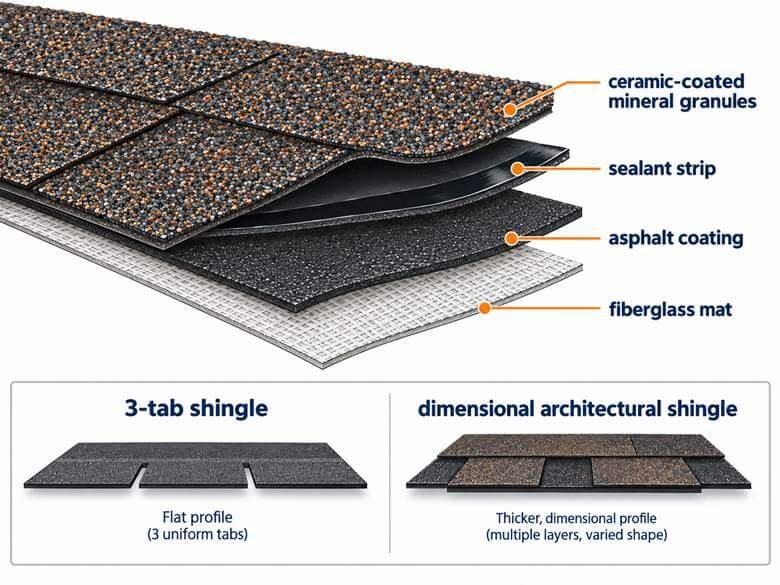
A composition roof is a steep-slope roof covered in asphalt shingles built from several layers: a fiberglass mat, an asphalt coating on both sides, and ceramic-coated mineral granules on top. "Composition" and "asphalt shingle" describe the same product, and it is the most common roof on homes across Western Pennsylvania.
Each layer has a job. The fiberglass mat gives the shingle strength without much weight. The asphalt is the actual waterproofing. The granules work like sunscreen, shielding the asphalt from UV light, and many include copper or zinc to slow algae growth. Heat-activated sealant strips glue each row to the one below it so wind can't lift the edges.
Older shingles used organic felt instead of fiberglass and were phased out because they soaked up water. If your house still has them, they're well past retirement. The asphalt shingle entry on Wikipedia and the Asphalt Roofing Manufacturers Association cover the product's history.
3-Tab vs. Architectural vs. Premium Shingles
Not every composition shingle performs the same. Here's how the three main types compare:
| Shingle type | Typical lifespan | Wind rating | Installed cost per square* |
|---|---|---|---|
| 3-tab | 10–20 years | 60–90 mph | $350–$450 |
| Architectural (dimensional) | 20–30+ years | 110–130 mph** | $450–$700 |
| Premium / luxury | 30–50 years | Varies by product | Above $700 |
*National ranges; one square = 100 sq ft. **With the manufacturer's starter strip and nailing pattern.
All three usually carry a Class A fire rating, the highest available, because the fiberglass core doesn't burn. Shingles tested to UL 2218 Class 4, the top impact rating for hail, can also earn a discount from some insurers.
For most Pittsburgh homes, I recommend architectural shingles. The price jump over 3-tab is modest, and the higher wind rating earns its keep on exposed hilltop lots.
Where Does a Composition Roof Leak First?
Most roof leaks start where the shingles stop: at the flashing around chimneys and walls, in the valleys where two slopes meet, and at the pipe boots around vents. The open field of shingles is usually the last place to fail. Eaves come next, mostly because of ice dams.
Flashing Around Chimneys and Walls
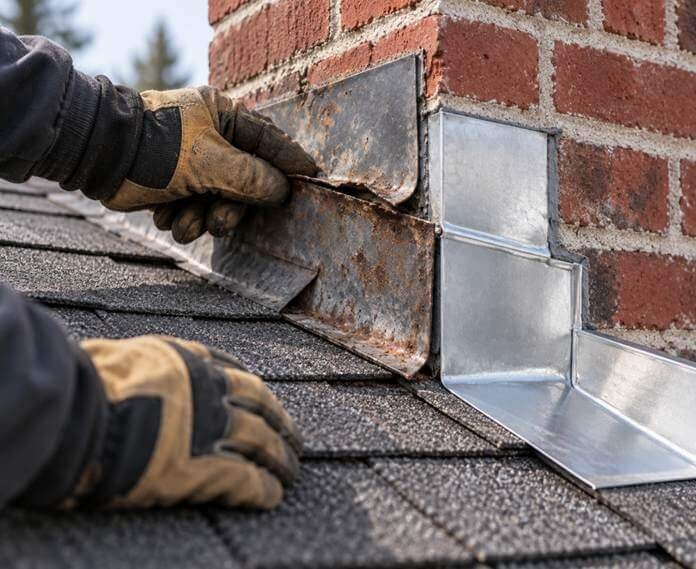
Flashing is the thin metal that seals the joint where the roof meets something else, such as a chimney, a sidewall, or a dormer. It moves with every temperature swing, so it's usually the first part to fail. On Pittsburgh's older brick homes, crumbling mortar joints and loose counter-flashing around the chimney are some of the most common leak sources we see.
From the ground, look for metal that looks bent, rusted, or pulled away from the brick. One more thing worth knowing: reusing old step flashing during a replacement can void manufacturer system warranties. If a roofer plans to reuse yours, ask why.
Roof Valleys
A valley is the V-shaped channel where two roof slopes meet, and it carries far more water than the rest of the roof. Leaves and debris pile up there and hold moisture against the shingles. A properly built valley has a self-adhering ice and water shield underneath. Check your valleys after the fall leaf drop.
Pipe Boots and Roof Vents
Every pipe or vent that pokes through the roof is sealed with a rubber or metal boot. The rubber dries out and cracks in the sun, often years before the shingles around it. It's a small failure, which is exactly why it gets missed, and it's one of the most frequent repairs we make.
Missing or Lifted Shingles
Strong wind can break the sealant strip and lift or tear a shingle, and even one missing shingle exposes the nail line. After a windy stretch, scan each slope from the yard for gaps or dark patches.
Found a Water Stain or a Missing Shingle?
Don't wait for it to spread. Tri-Link Contracting will inspect your roof, trace the leak to its real source, and show you photos of exactly what we find.
Why Do Pittsburgh Roofs Get Ice Dams?
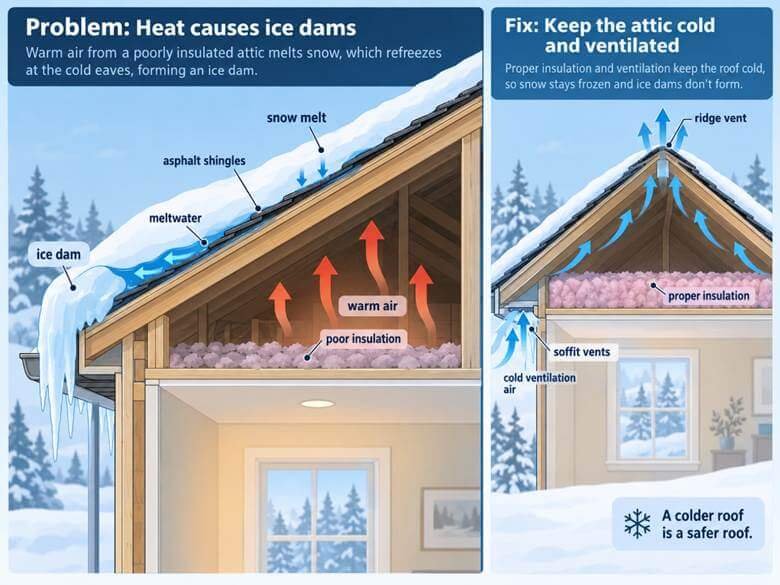
Ice dams form when heat from the house melts snow on the upper roof and the water refreezes at the colder eaves. The ice ridge traps meltwater, which backs up under the shingles and leaks into walls and ceilings. A well-ventilated, well-insulated attic is the main defense.
Ventilation matters year-round. In summer, a poorly vented attic can climb above 150°F and bake the shingles from underneath. In winter, the same trapped heat starts the ice-dam cycle, and Southwestern Pennsylvania's freeze-thaw swings make it worse.
The fix is balance: intake vents at the soffits, exhaust at the ridge, and enough insulation on the attic floor to keep house heat out of the roof deck. The U.S. Department of Energy's insulation guide explains the insulation side well. On the roof itself, ice and water shield along the eaves is your backup if an ice dam does form.
Gutters and Drainage
Clogged gutters push water back under the roof edge and soak the fascia and decking. Clean them at least twice a year and point downspouts well away from the foundation.
How Often Should You Inspect a Composition Roof?
Inspect your roof twice a year, in spring and fall, and after any storm with high wind or hail. You can handle the ground-level checks yourself. Leave anything that requires walking the roof to a roofer, especially on a steep or wet slope.
| Season | What to check |
|---|---|
| Spring | Winter damage, lifted or missing shingles, clogged gutters, damp insulation or frost stains in the attic |
| Summer | Cracked pipe boots and sealant, attic ventilation working, overhanging branches trimmed back |
| Fall | Leaves cleared from gutters and valleys, flashing checked before snow, professional inspection booked |
| Winter | Ice dams at the eaves, new ceiling stains, heavy snow load (from the ground only) |
What Not to Do
Don't pressure-wash the shingles. High pressure strips the granules and shortens the roof's life. Use a low-pressure soft wash for moss and algae.
Don't climb a wet or steep roof. Falls from roofs cause serious injuries every year. Binoculars from the yard work fine.
Don't just caulk the stain. Water often enters at a valley or flashing several feet away from where it drips inside. Find the source first.
When Is It Time to Replace, Not Repair?
Replace the roof when leaks keep coming back in different spots, when shingles curl or shed granules across whole slopes, or when the roof is past its rated lifespan. For 3-tab shingles that's often 15 to 20 years. For architectural shingles, it's 20 to 30 years or more.
Age also matters to your insurer. Many carriers switch roofs older than about 15 years from replacement cost to actual cash value. One policy endorsement in our research cut the payout on a 19-year-old roof to 43% of replacement cost.
Nationally, a full roof replacement on a 1,500-square-foot home usually runs $10,000 to $15,000, with labor about 60% of the cost. For the strongest warranty, ask for a matched system. Owens Corning's Total Protection Roofing System requires starter shingles, underlayment, ice and water shield and ridge caps from the same manufacturer.
Why Pittsburgh Homeowners Call Tri-Link Contracting
Tri-Link Contracting is a veteran-owned roofing and exterior contractor based in Eighty-Four, PA, that installs and repairs composition roofs across Pennsylvania, West Virginia and Ohio. We're an Owens Corning Preferred installer, BBB A+ accredited, licensed under PA License #PA150574, and rated 5.0 stars on Google from more than 100 verified reviews. Over 15+ years, our crews have installed more than 1,000 roofs.
“We treat every roof like it's our own home. Our neighbors trust us, and we take that seriously. No shortcuts, no surprises.” That's how I built this company after my military service, and it's why I walk every finished job myself before I sign off.
Want more detail on the leak side? Read our guide on how to prevent roof leaks before they damage your Pittsburgh home.

Jim personally checks in with every customer and walks every completed project before he signs off.
Frequently Asked Questions
Common questions we hear from homeowners across PA, WV, and OH about composition roofs.
How long does a composition roof last in Pittsburgh?+
Is a composition roof the same as an asphalt shingle roof?+
What is the most common cause of roof leaks?+
How much does a new composition roof cost?+
Can I pressure-wash my composition roof?+
Does homeowners insurance cover roof leaks?+
Keep the Water Out Before It Gets In
If you've spotted a stain, a missing shingle or rusted flashing, call Tri-Link Contracting for a free inspection. We'll show you what we find and tell you straight whether it needs a repair or nothing at all.