
How to Choose a Roofing Contractor: Complete 2026 Guide (PA, WV, OH)
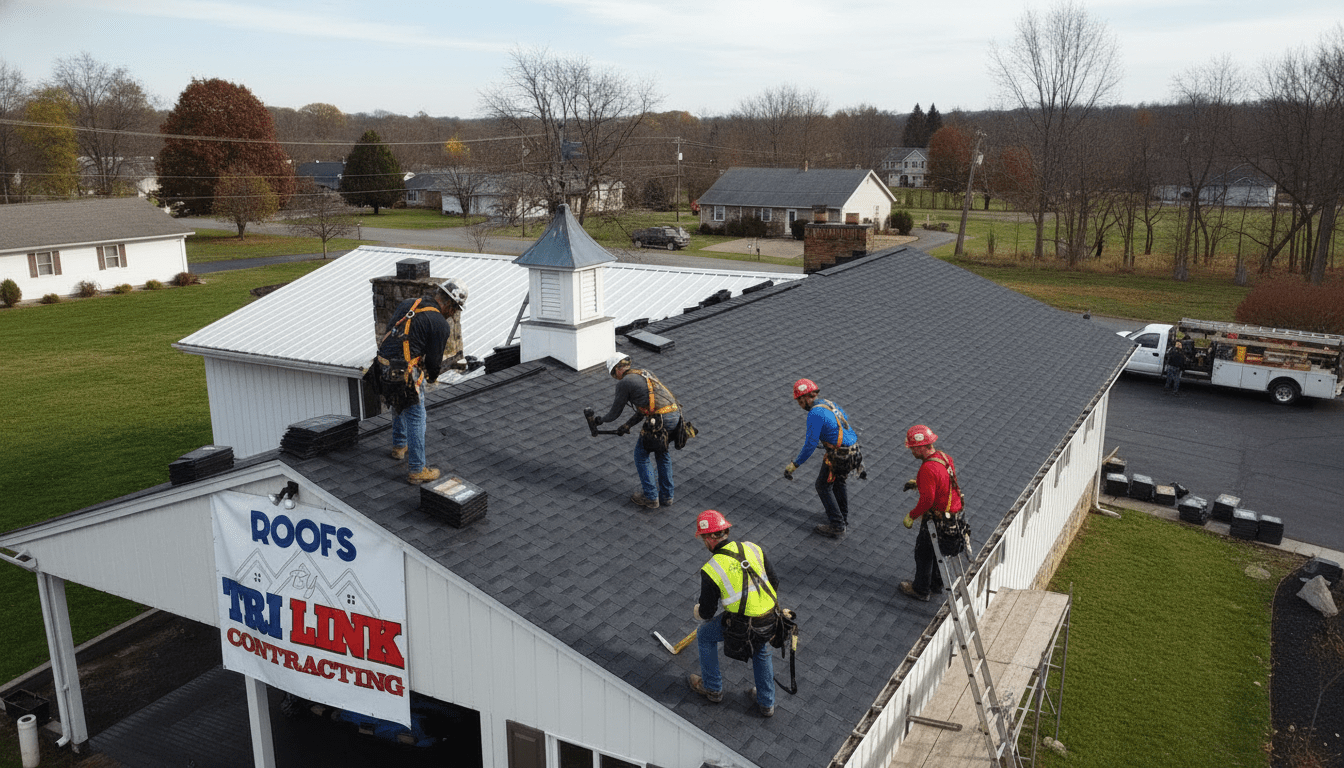
Hiring the wrong roofer can cost you thousands and leave you with a roof that fails years early. This 2026 guide shows you exactly how to choose a roofing contractor you can trust - the questions to ask, the red flags to avoid, and what every good estimate should include in PA, WV, and OH.
A new roof is one of the biggest investments you'll make in your home, and the contractor you pick determines whether it lasts 30 years or starts leaking in five. The hard part? Not every roofer operates with the same honesty and skill, and storm season brings out-of-town crews looking for quick work. Knowing what to check protects your money and your home.
At Tri-Link Contracting Services, our veteran-owned team has earned the trust of thousands of homeowners across Pittsburgh, Washington County, Allegheny County, Morgantown WV, and Wheeling WV. Here's the honest checklist we'd want our own families to use.
- Always verify license and insurance (liability + workers' comp) before signing
- Choose a local contractor with a real address - avoid storm chasers
- Get at least 3 detailed written estimates and compare scope, not just price
- A bid 25% below the others usually means cut corners or hidden charges
- Look for both a manufacturer warranty and a workmanship warranty
Why Choosing the Right Roofer Matters
Your roof is the single most important protective system on your home. A quality installation by a reputable contractor can last decades and return strong value at resale. A poor installation - even with good materials - can fail in a few years, void your warranty, and lead to leaks, mold, and structural damage. The contractor matters as much as the shingles.
7 Things to Verify Before You Hire
Before signing anything, confirm all seven of these:
1. License
Verify the contractor holds the proper state or local credentials and that the license is current and in good standing.
2. Insurance
Require proof of both general liability insurance (covers damage to your property) and workers' compensation (covers on-site injuries). Ask for the actual certificate and verify it with the carrier - don't accept a photocopy.
3. Local Track Record
Choose a contractor with a physical local address (not a PO box) who knows your area's codes, permits, and climate challenges.
4. References and Reviews
Ask for 5-10 recent local references from the last 3-6 months. Check Google reviews for patterns and verify standing with the Better Business Bureau.
5. Manufacturer Certifications
Certifications (like Owens Corning Preferred or GAF) show the roofer is trained on specific materials and can offer enhanced warranties.
6. A Detailed Written Estimate
Insist on an itemized estimate - never a vague lump sum. More on what it should include below.
7. Clear Warranties
Confirm both a material warranty and a workmanship warranty, in writing, before work begins.
Roofing Contractor Licensing in PA, WV & OH
Licensing rules differ across our service area, so know what applies to you:
- Pennsylvania: Home improvement contractors must register with the PA Attorney General's office (Home Improvement Contractor registration). Local licensing also varies by municipality.
- West Virginia: Contractors generally need a West Virginia Contractor License from the state for work above a set dollar threshold.
- Ohio: There is no statewide roofing license; requirements vary by city and county, so check with your local building authority.
In every case, ask for the license or registration number and verify it independently through the state or local database. It takes five minutes and protects you from unlicensed operators.
Questions to Ask a Roofing Contractor
Bring this list to every estimate appointment:
- Are you licensed and insured in this state? Can I see proof?
- How long have you worked in this local area?
- Will your own crew or subcontractors do the work?
- Do you pull all required permits?
- What manufacturer and workmanship warranties do you offer?
- Can you provide recent local references?
- How do you handle cleanup and protecting my property?
- What's your payment schedule?
Red Flags to Avoid
Walk away if you see any of these warning signs:
- No proof of license or insurance - or "I'll send it later"
- High-pressure tactics like "sign today for a huge discount"
- Large upfront deposits or full payment before work starts
- Cash-only or "off the books" discounts
- A bid 25%+ below everyone else - a sign of cut corners
- No written contract or a vague, lump-sum estimate
- Asking you to pull the permit - often means they can't
- "We have leftover materials from a nearby job" - a classic scam pitch
If a contractor is hard to reach, dodges questions, or gets defensive when you ask for documents, that's how they'll communicate during the job too. Professionalism during the estimate predicts professionalism on the roof.
What a Good Roofing Estimate Includes
A proper estimate is more than a single price. It should clearly itemize:
- Specific material brands and product lines (shingles, underlayment, flashing)
- Full scope of work, including tear-off
- Ventilation and any deck repair allowances
- Permits and disposal/cleanup
- Itemized labor and materials
- Payment schedule and start date
- Warranty terms for both materials and workmanship
Get at least three written estimates so you can compare scope, not just the bottom line. If one quote is dramatically lower, ask exactly what's being left out. For help understanding pricing, see our 2026 roof cost guide.
Understanding Roofing Warranties
There are two distinct warranties, and you want both:
- Manufacturer warranty: Covers defects in the roofing materials themselves (curling, granule loss, sealant failure).
- Workmanship warranty: Covers the contractor's installation - ideally at least 5 to 10 years.
Ask what's excluded, whether the warranty transfers to a future buyer, what can void it, and who handles claims. A long material warranty means little if installation errors aren't covered or the contractor is impossible to reach afterward.
Beware of Storm Chasers
After a big storm or hailstorm, out-of-town crews flood the area offering quick repairs. Many do poor work, then disappear - leaving you with no one to call when problems appear and a voided warranty. Always choose an established local contractor with a permanent address, real reviews, and community ties. If you're filing a claim, our roof insurance guide explains how to work with your adjuster honestly.
Why Choose Tri-Link Contracting
We built our business on the exact standards above. Here's why homeowners across Pittsburgh, Washington County, Allegheny County, Morgantown WV, Wheeling WV, and Cuyahoga County OH trust Tri-Link.
- Veteran owned and operated with military discipline and honest work
- Fully licensed and insured - liability and workers' compensation
- 15+ years of local experience across PA, WV, and OH
- A+ BBB rating and 4.9-star Google reviews from 110+ customers
- Owens Corning Preferred Contractor with top material warranties
- 25-year workmanship warranty and detailed written estimates
- We pull every permit and never use high-pressure sales
Get an Honest Estimate from a Contractor You Can Trust
No pressure, no shortcuts - just straight answers from the most trusted veteran-owned roofing team in PA, WV, and OH.
Final Thoughts
Learning how to choose a roofing contractor comes down to a few non-negotiables: verify license and insurance, choose local, get detailed written estimates, demand clear warranties, and trust your instincts on red flags. Do that, and you'll protect both your home and your wallet.
Tri-Link Contracting has met these standards for homeowners across Pittsburgh, Washington County, Allegheny County, Morgantown WV, Wheeling WV, and Cuyahoga County OH for over 15 years.
Ready for an honest estimate? Call us at 724-470-7669 or get your free estimate online.
Frequently Asked Questions
Have more questions about hiring a roofer? Here are the most common questions we hear from homeowners across PA, WV, and OH.
Verify the contractor is licensed and insured, has a local physical address, strong reviews and recent references, manufacturer certifications, and provides a detailed written estimate with both material and workmanship warranties. Get at least three written estimates before signing anything.
Ask if they are licensed and insured, how long they have worked locally, who will do the work, what warranties they offer, whether they pull permits, and for recent local references. Always request proof of insurance and a written, itemized estimate before agreeing to anything.
Red flags include no proof of license or insurance, high-pressure "sign today" tactics, large upfront deposits, cash-only or off-the-books offers, a bid far below others, no written contract, and asking you to pull the permit yourself. Any of these should send you looking elsewhere.
In Pennsylvania, home improvement contractors must register with the PA Attorney General's office, and local licensing requirements vary by municipality. West Virginia requires a state contractor license, while Ohio licensing varies by city. Always verify credentials independently before hiring.
Get at least three detailed written estimates so you can compare scope, materials, and price. Be cautious of any bid that comes in 25 percent or more below the others, as it often signals cut corners, cheaper materials, or hidden charges added later.
A proper estimate itemizes materials and brands, labor, tear-off, underlayment, flashing, ventilation, permits, cleanup, payment schedule, start date, and warranty terms. A single lump-sum price with no breakdown is a red flag that leaves room for hidden surprises.
Look for two warranties: a manufacturer warranty covering material defects and a workmanship warranty covering installation, ideally at least 5 to 10 years. Confirm what is excluded, whether it transfers to a future buyer, and what actions could void it.
We serve Pittsburgh, Canonsburg, Bridgeville, Washington County, Allegheny County, Westmoreland County, Morgantown WV, Wheeling WV, northern West Virginia, Cuyahoga County OH, Lorain County OH, and surrounding areas.